
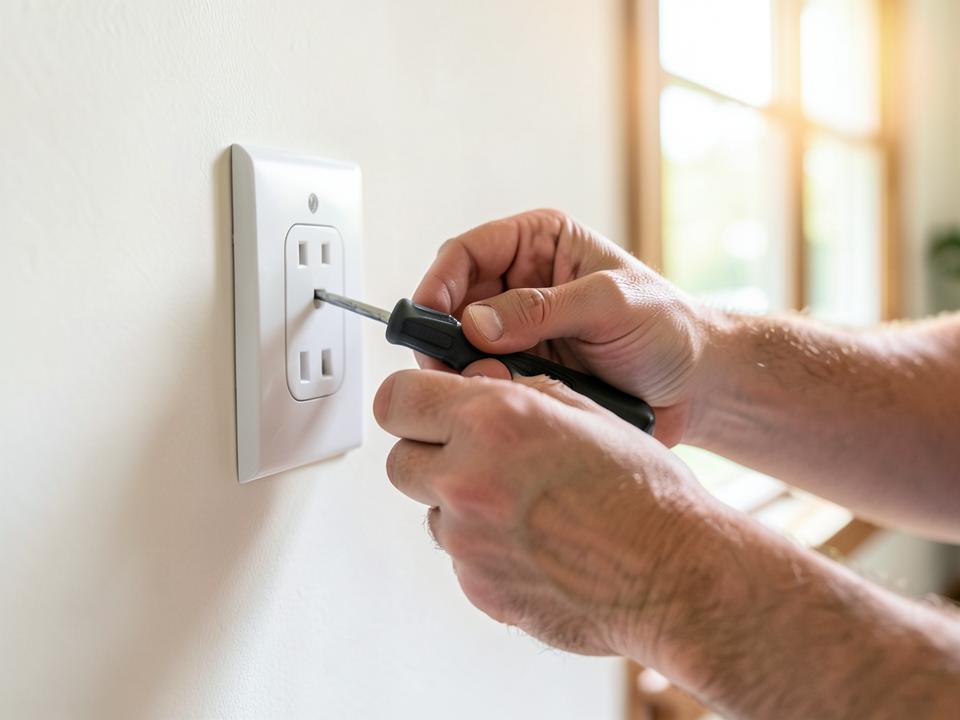
EV Charger Installation in Brandon, FL
Level 2 home charger installation, including the load calculation that determines whether your panel can support one. We connect you with licensed electricians who pull the permit and do it properly.
Level 1, Level 2 and Fast Charging Explained
Level 1
A standard 120-volt household outlet. No installation required, and no electrician needed. It adds only a few miles of range per hour, which works if you drive short distances and can leave the car plugged in overnight for long stretches. For most households it is not enough.
Level 2
A dedicated 240-volt circuit, the same class of supply as an electric dryer or range. This is what nearly every home installation means. It typically brings a vehicle from low to full overnight, and it is what this page is about.
DC fast charging
Commercial-grade equipment found at public charging stations. It is not installed in homes — the power requirements are far beyond residential service.
Will Your Electrical Panel Support an EV Charger?
This is the question that determines the whole job, and it is why an EV charger installation starts with an assessment rather than a price.
What a Level 2 charger needs
Most home Level 2 chargers draw 32 to 48 amps, which requires a dedicated 40 to 60-amp circuit at 240 volts. That is a substantial load — comparable to adding a second electric range to the house.
The load calculation
A licensed electrician calculates your existing load against your service size. This accounts for the air conditioning, water heater, range, dryer, pool equipment and everything else already drawing power, then determines whether the remaining capacity supports a charger.
This is not a guess based on the age of the house. Two identical houses on the same street can produce different answers depending on what is installed inside them.
Three possible outcomes
- Your panel supports it as-is. A dedicated circuit is added and the charger installed. This is the simplest and cheapest outcome.
- Your panel has capacity but no free slots. Sometimes resolved with a subpanel or by reorganising the existing circuits.
- Your service is not large enough. A panel upgrade is needed first. This is common in Brandon homes still on 100-amp service, particularly with central air conditioning and electric appliances already installed.
Load management as an alternative
Some chargers and add-on devices can reduce charging current when the house draws heavily elsewhere, which can allow a charger on a panel that could not otherwise support one. It is not right for every situation, but it is worth asking about before committing to a full service upgrade.
Hardwired or Plug-In: Which Installation Type
Plug-in (NEMA 14-50)
The charger plugs into a 240-volt receptacle, the same type used for many electric ranges. The advantage is that the unit can be unplugged and taken with you if you move. It is generally limited to lower amperage than a hardwired unit.
Hardwired
The charger is wired directly to the circuit with no plug. This allows higher amperage on chargers that support it, and it is often the better choice for outdoor installations because there is no receptacle exposed to weather.
Which one for a Florida installation
For outdoor or carport installations in this climate, hardwiring is frequently preferred. Humidity, wind-driven rain and salt air are hard on outdoor receptacles. If you do install a plug-in unit outside, the enclosure rating matters — ask what it is rated for.
1. Assessment and load calculation.
The electrician checks the panel, calculates the load, and confirms what your service supports.
2. Placement decision.
Where the charger goes determines the cable run, which affects both cost and how usable it is day to day. Consider which side your vehicle's charge port is on, and whether you might have a second EV later.
3. Permit.
EV charger installation requires a permit in unincorporated Hillsborough County, which includes Brandon. The licensed contractor pulls it.
4. The install.
A dedicated circuit is run from the panel to the charger location, the breaker fitted, and the unit mounted and connected.
5. Inspection.
A county inspector verifies the work before the permit closes.
6. Testing.
The charger is tested with the vehicle to confirm it delivers the expected charging rate.
What EV Charger Installation Costs in Brandon
The charger unit itself and the installation are separate costs, and the installation varies more than most people expect.
What drives the installation price
- Distance from the panel to the charger location — the single largest variable. A charger on the wall directly behind the panel is a very different job from one at the far end of a detached garage.
- Whether the run is through open framing, finished walls, or underground
- Whether the panel has a free slot or needs a subpanel
- Whether a service upgrade is required first
- Charger amperage — higher amperage means heavier wire
- Indoor or outdoor — outdoor installations need weather-rated components
- Permit and inspection fees — set by the county
If other circuit adjustments or an electrical repair are required during testing, those are addressed beforehand.
Rebates and tax credits
Federal tax credits and utility rebates for EV charger installation have been available, but eligibility rules and program status change. Check the current position before you budget around one, rather than assuming it applies.
Getting a useful quote
Ask whether the quote includes the permit, the load calculation and any panel work. A price that excludes those is not a complete price.
Areas We Serve
Brandon (33510, 33511), Valrico, Riverview, Seffner, Dover, Lithia, Bloomingdale, Apollo Beach, Gibsonton, Plant City, Tampa, Ruskin and Mango — roughly 30 miles around Brandon.
Frequently Asked Questions
Direct answers regarding permitting, panel sizing, Florida outdoor installations, and load calculations.
Get a Quote for EV Charger Installation
Tell us your vehicle, where you want the charger, and your panel's amperage if you know it. We will connect you with a licensed electrician who can assess it.
Fast Quote Form